The Ultimate Hasselblad X2D Travel Kit for Landscape Photography
Every photographer has heard this advice before: pack light. But on a multi-day wilderness shoot, it’s about more than cameras and lenses. Your survival kit matters just as much as your gear.
When I traveled through the Alps to work on my Hasselblad Masters series, I had to find the balance between top-notch image quality and practical endurance in extreme conditions. Today, I’ll walk you through exactly what I carried, what I could have left behind, and how you can optimize your own travel kit for landscape photography.
The Challenge: Shooting in Extreme Conditions
Five days before production began, my biggest concern wasn’t the weather or route planning—it was whether my camera would even arrive on time. We had already postponed the shoot twice, and winter was closing in on the Alps. Finally, two prototypes of the still unreleased Hasselblad X2D 100C landed in my mailbox, along with the new XCD 38V, 55V, and 90V lenses, plus the ultra-wide XCD 21mm.
It felt like Christmas morning, but with no manual and only days to learn a brand-new system. The adventure had officially begun.
Camera Equipment: Quality Over Quantity
My gear needed to handle the rugged conditions without weighing me down. Here’s what I packed:
That’s already a lot of weight, but the pure camera setup filled only a fraction of my 70L pack. The rest? Survival gear.
Outdoor Gear: Staying Alive in the Alps
When photographing in remote locations, your comfort and safety are just as important as the camera in your hands. My essentials included:
- Sleeping system: ZenBivy Light Bed (ISO mat, down quilt, and inflatable pillow).
- Water: 3 liters plus a backup filter.
- Food: Freeze-dried meals for dinner and breakfast.
- Clothing: Rain jacket, rain pants, and a down jacket.
- Tools: Hiking poles, multitool, and headlamp with red light mode.
All in all, the pack weighed about 15 kilograms—heavy, but every item had a purpose.
A Brutal Ascent and Unforgiving Weather
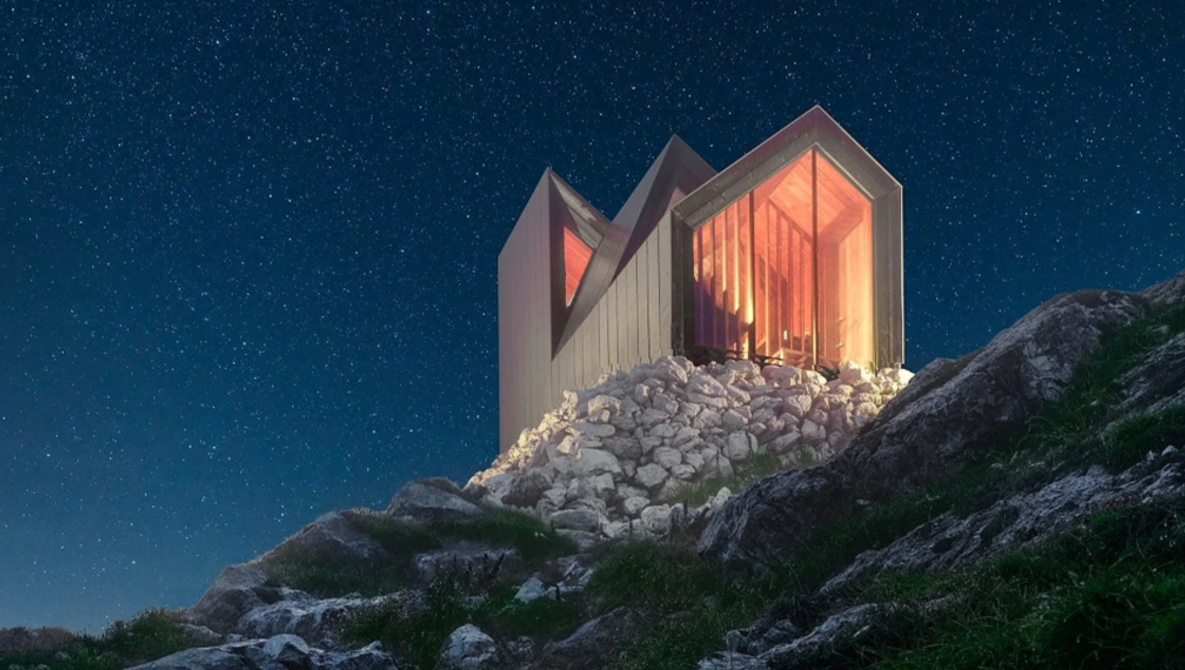
The climb to Slovenia’s Bivak pod Skuto hut was grueling: 1,500 meters of elevation gain over just 8 kilometers, with fog and rain reducing visibility to 30 meters. By the time we reached the hut, it wasn’t just the lack of panoramic views that challenged me. The shelter quickly filled with hikers, making the idea of quiet, controlled photography impossible.
Instead, I turned my attention to the details. A rocky crevice revealed a surreal composition of the hut framed by jagged stone layers. It became one of my favorite images from the trip, a reminder that sometimes the best shots come from adapting, not sticking to the plan.
Flexibility Beats Perfection
That night, patience paid off. For hours, my friend Marcus and I took turns shielding the X2D from drizzle with an umbrella, waiting for the clouds to break. Around 10 p.m., the sky finally cleared. I used the Aputure lights to illuminate the hut against the dramatic backdrop, capturing one of the defining frames of the series.
At sunrise, another opportunity presented itself. The hut emerged in soft dawn light as fog lifted from the valley, giving me the clean landscape shots I had hoped for.
Pro tip: Bring a headlamp with red light mode. It preserves your night vision while still letting you check your camera settings.
Conclusion: The Perfect Travel Kit for Landscape Photography
Hiking back down, I reflected on what worked and what I could change. The XCD 55V barely left the bag—two or three lenses would have been enough. Rain gear, however, was non-negotiable. And the Hasselblad X2D? It exceeded my expectations. The depth and detail in the Raw files made the grueling climb worth every step.
Takeaways for Your Own Kit
- Carry fewer lenses to reduce weight and increase creative freedom.
- Prioritize survival gear—comfort enables creativity.
- Stay flexible. Conditions will never align perfectly, but they’ll always offer something.
The Bivak pod Skuto might not have given me clear skies at first, but it taught me the value of adaptation.
link