Madrid invites calm: slow tourism amid nature, pedals and adventure
Protected areas, the basis of responsible tourism
The Madrid Region has an extensive network of protected natural areas that underpin tourism which respects the rhythms of the environment. Not surprisingly, over half of its surface area is included under some form of environmental protection so visitors can immerse themselves in nature while safeguarding its integrity.
One of the key tools is the Natura 2000 Network, which covers almost 40% of the Madrid region, structured into seven SCI (Sites of Community Importance) and seven ZEPAs (Special Protection Areas for Birds).
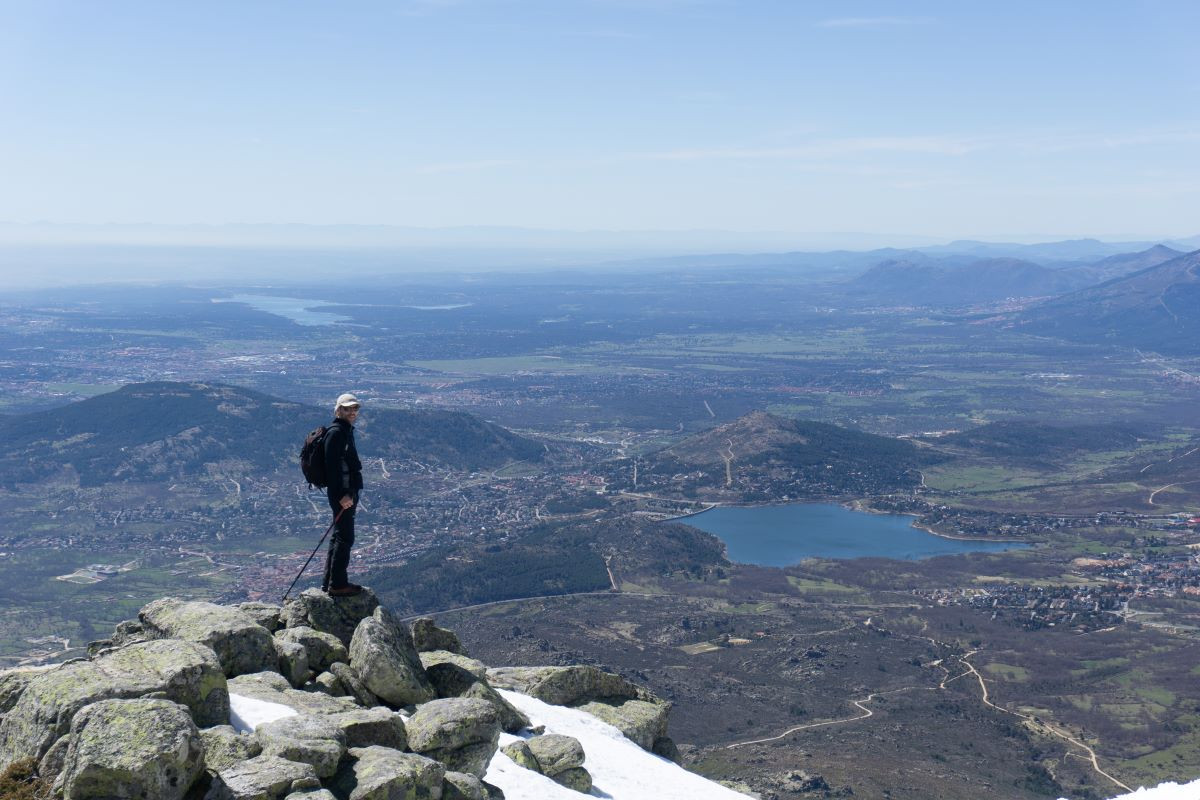
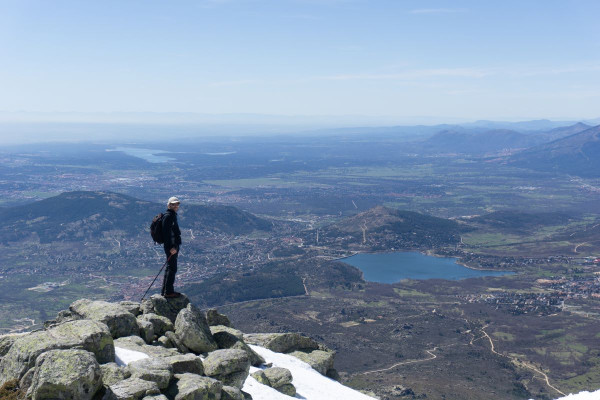
In Madrid, slow tourism is already an alternative for exploring landscapes with sensitivity, pausing before the silence, relaxing and having fun. Sierra de Guadarrama. Source: Javier Blanquer_Comunidad de Madrid.
A good example of this is the Lozoya Basin and Sierra Norte, which stands out for its ecological wealth with the largest breeding population of black vultures in the region, diverse natural habitats, glacial landscapes and forests that connect valley and mountains. Another example is the Southeast Regional Park, with 31,550 hectares of high value for its biodiversity.
To strengthen visitors’ environmental awareness, the Madrid Region produces the Anuario de Biodiversidad [Biodiversity Yearbook] of the Protected Natural Areas of the south of the region, which includes relevant information organised in easily accessible fact sheets on flora, butterflies, unique insects, endemic species, etc., that reflect the area’s natural wealth.
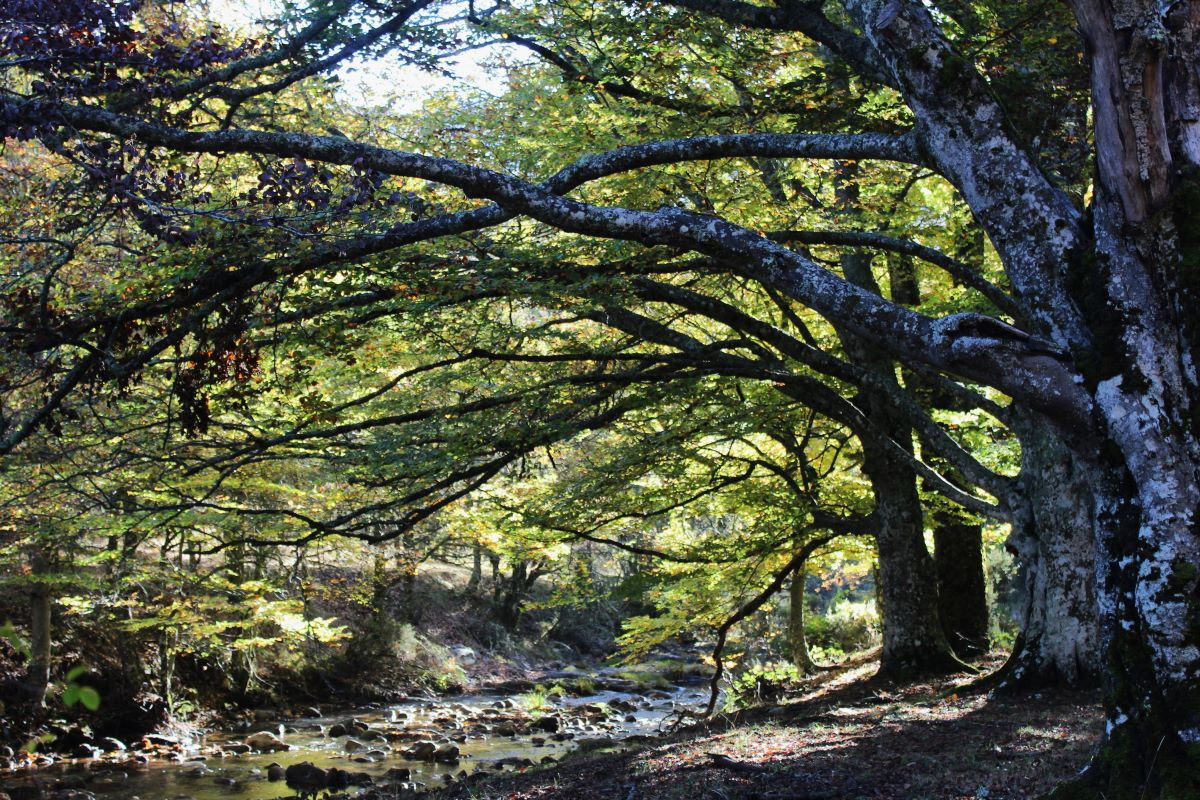
The Montejo Beech Forest is a true gem within the protected area of the region. Source: Mario Vega_Comunidad de Madrid.
Protected areas are not an obstacle to human enjoyment since they are conceived as areas for regulated public use. Recreational areas with tables, rest areas and signage are provided, concentrating leisure demand to avoid pressure on more sensitive areas.
Likewise, the Madrid en Verde programme promotes 50 routes in areas such as the Southeast Regional Park, Curso Medio del Guadarrama, the Western Sierra or the Sierra del Rincón Biosphere Reserve. The routes have signage and information resources so that visitors can proceed at their own pace, with full awareness of the environment.
Pedalling in slow motion: CiclaMadrid and mindful cycle tourism
Cycling tourism is one of the practical pillars of slow tourism and in the Madrid Region it has a structured project: CiclaMadrid. This project promotes a product club that brings together accommodation, restaurants, service companies, local councils and territorial associations committed to a specialised and homogeneous offering.
One of its most ambitious pillars is the CiclaMadrid Grand Tour: a circular route of 432 kilometres that connects 17 stages crossing the most diverse landscapes of Madrid. The total elevation gain is 4,161 metres, which requires effort but also allows a leisurely pace with stops, contemplation and territorial immersion.
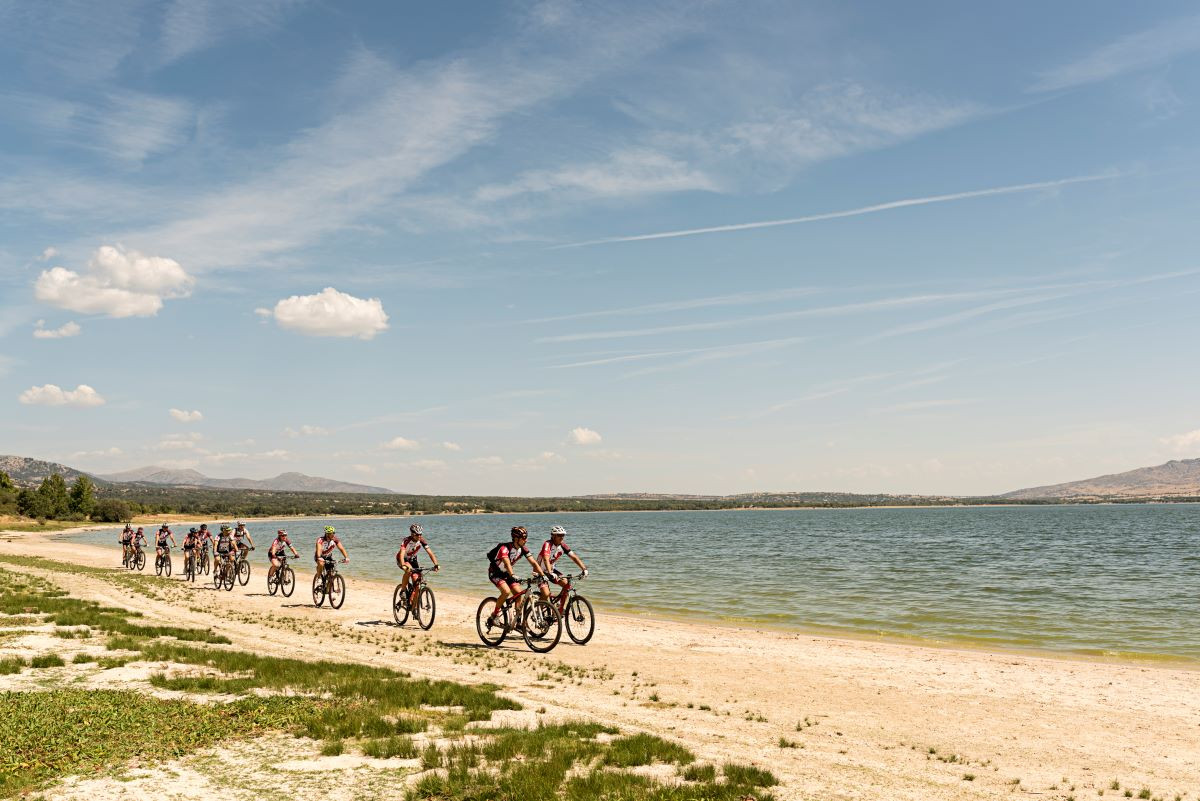
CiclaMadrid offers over 1,200 kilometres of routes and themed routes totalling up to 2,500 km, signposted for different levels. In the image, Manzanares el Real. Source: Hugo Fernández_Comunidad de Madrid.
The CiclaMadrid MTB route is another notable itinerary, with around 213 kilometres on a circular route through the Sierra Norte, passing through such iconic places as the Sierra del Rincón Biosphere Reserve, the Lozoya or the Jarama Valley, linking emblematic villages. This circuit climbs up to 1,845 metres at some points and maintains high elevations for much of the route, ideal for those seeking challenges in peace.
As well as routes for experienced cyclists, CiclaMadrid offers lower-difficulty itineraries (family, gravel, local routes) for those who prefer to enjoy without rushing or worrying about performance. It also promotes themed routes that combine nature, heritage and culture. So whilst pedalling, you can enjoy visiting historic towns, wineries or monuments, passing through charming villages.
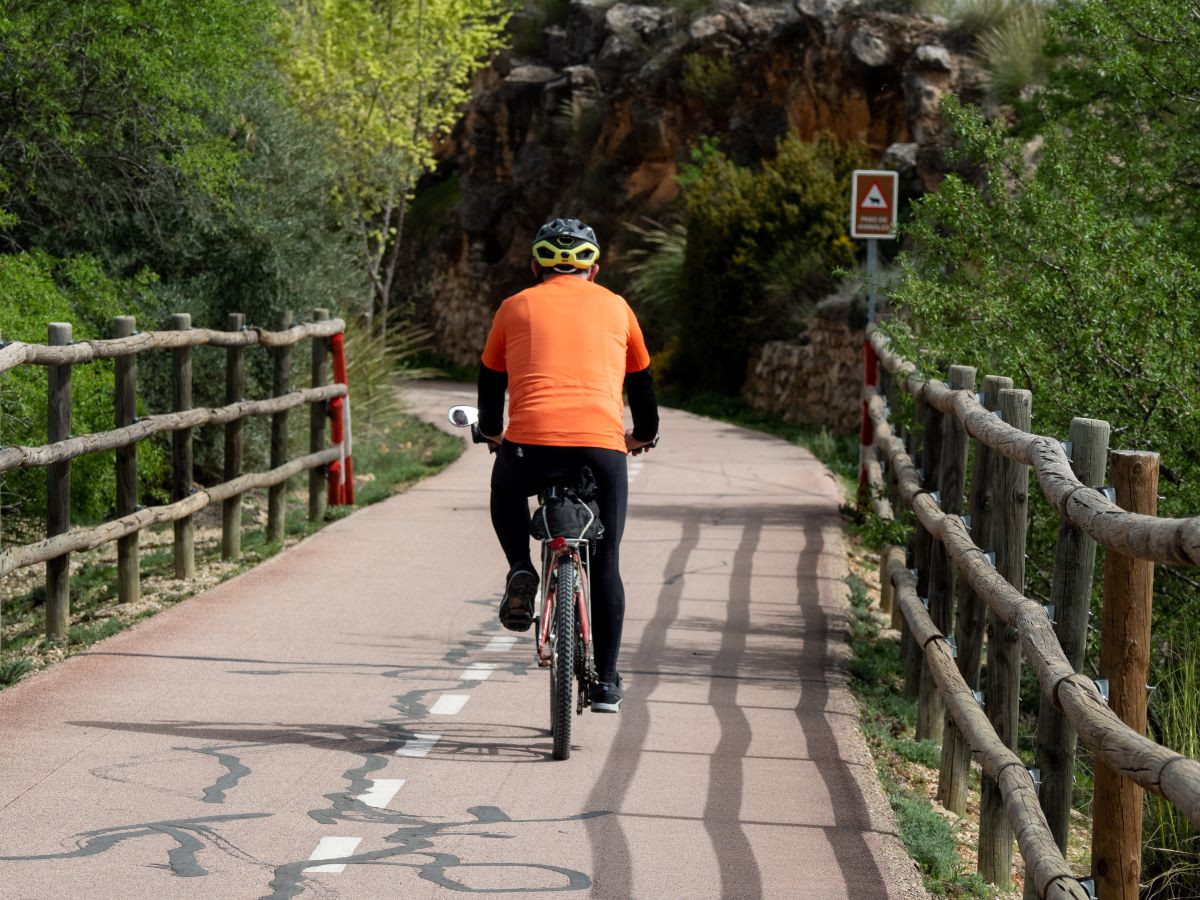
CiclaMadrid offers family routes on stretches of Greenways for cycling with the whole family. Source: David Serrano_Comunidad de Madrid.
The project includes a CiclaMadrid Quality Plan that applies criteria to member establishments, whether accommodation, restaurants or service points, such as having bike storage, basic tools, a list of service companies, luggage transport services, offering information material, etc. In this way, cycle tourism experience is guaranteed to be comfortable, responsible and aligned with the values of slow tourism.
Adventure with responsibility: sustainable active tourism
Active tourism, which offers sporting activities in natural environments, may seem contrary to slow, but in the Madrid Region, its approach is adapted to the logic of conservation, quality and control. The Madrid Association of Active Tourism Companies (AETAM) promotes activities such as zip-lining, climbing, kayaking, canyoning and other outdoor adventures, always with criteria of safety and sustainability.
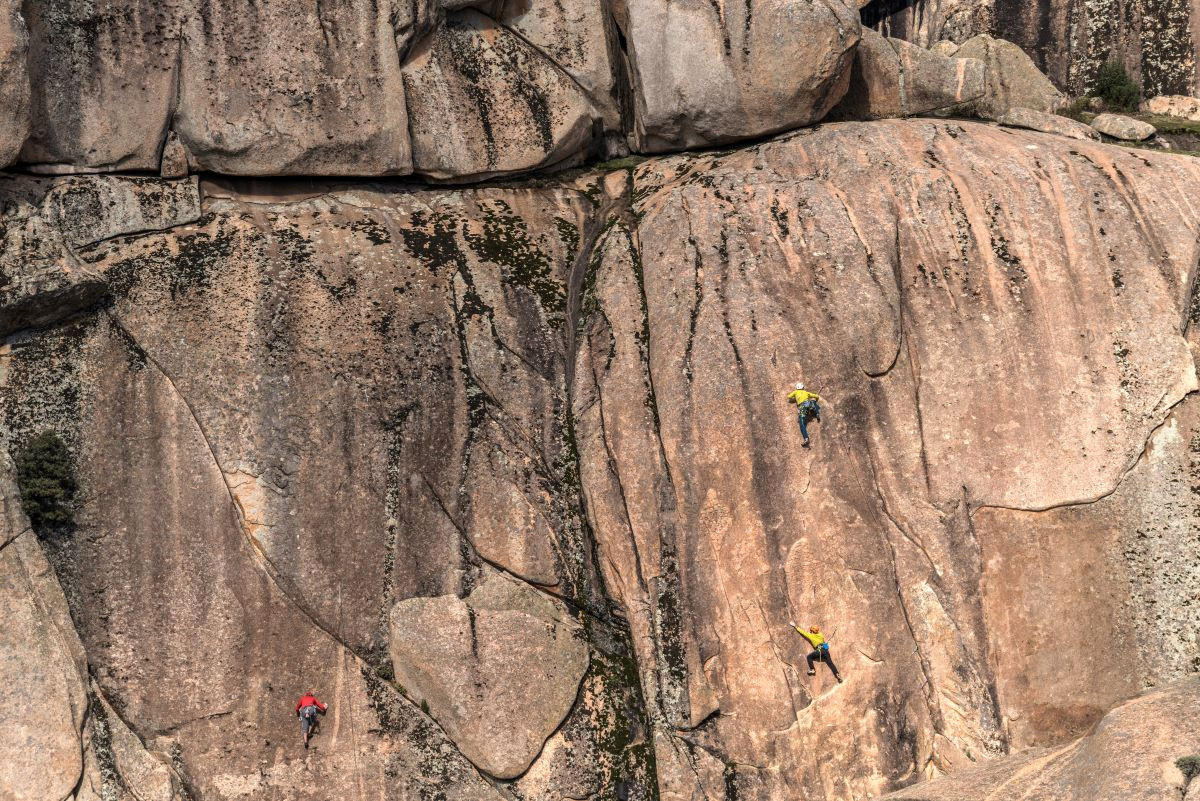
La Pedriza is the ideal place for climbing enthusiasts. Source: Javier Sánchez_Comunidad de Madrid.
AETAM requires companies to use CE-approved equipment, have reasonable guide/client ratios and to comply with current regulations. It also works to regulate the activity through a regional active tourism regulation that sets out permits, accreditations and civil liability.
These activities allow visitors an active immersion in natural environments but with controlled rigour. It is not about multiple intense sports but about experiences compatible with the environment and with a reduced environmental footprint.
Connecting components: an integrated slow offering
The Madrid Region brings together three factors that converge in a consolidated slow offering:
- Well-protected nature, since thanks to natural areas, reserves, regional parks and the Natura 2000 Network, there is a solid ecological foundation for visitors to enjoy without altering the environment.
- Structured cycling routes: with CiclaMadrid an organic network of itineraries and quality services is offered that allow you to travel through municipalities, landscapes and heritage at an easy pedalling pace.
- Active experiences under control: adventurous activity is possible but regulated and professional, so that it does not compete with the logic of slowing the experience, but complements it.
The Madrid Region is a territory that invites you to pause, with protected natural spaces, structured cycling routes and regulated active-tourism companies. Slow tourism here combines nature with culture, mindful exercise and adventure with a sense of calmness. By choosing this model, not only do visitors cover kilometres, they also gain calm, connection and respect.
link