


Creative Australia has been accused of racking up an “excessive” overseas travel bill of $636,126, sending officials on more than 100 international trips since its restructure two years ago.
The federal opposition’s arts spokesman Julian Leeser said the government’s principal arts funding agency had sent officials abroad “on average once every eight days”, at a time when arts organisations were struggling to secure federal funding.
“Right now, families are cancelling trips, cutting back on groceries and watching every dollar,” Leeser said. “Yet under Labor, Creative Australia are sending officials overseas on average once every eight days. That tells you everything about this government’s priorities.”

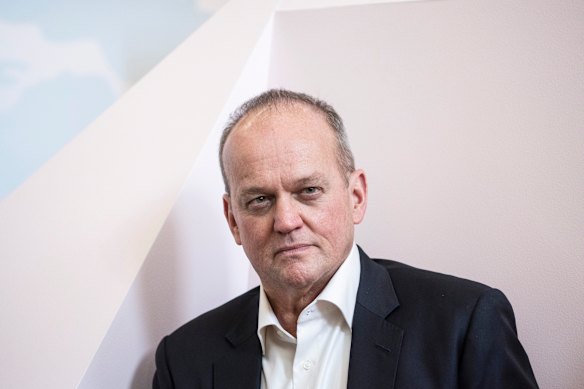
Creative Australia chief executive Adrian Collette.
Credit: Josh Robenstone
Last month, Creative Australia chief executive Adrian Collette travelled business class for a four-night UNESCO conference in Barcelona, billed as the world’s biggest conference on cultural policy. Collette stayed at the Leonardo Royal Hotel at a total cost to taxpayers of $17,939, or almost $6000 a day. To attend a four-day summit on arts and culture in South Korea, three staff, including Collette, flew business class and stayed at a further cost of $26,651.
“With 119 full-time staff and 101 international trips in just over two years, Creative Australia is almost at the point where every staff member could have had an overseas trip. That doesn’t pass the pub test,” Leeser said.
But Collette told Senate estimates he had represented Australia on behalf of the minister at Barcelona and was a member of the international federation that staged the Seoul summit that brought together key leaders and decision-makers from around the world to chart the future on arts and cultural policy.
International travel and engagement was directly tied to the agency’s legislated role to support and promote the development of markets and audiences for Australian artists. As well as opening opportunities for artists, staff attendance advanced Australia’s international arts and culture reputation on the world stage.
His own presence at those forums would make a “difference to the sector” ahead of the review planned for Labor’s national cultural policy, Collette said.
“We are in the position of advising on arts policy and that conference was looking at three or four really vital themes including artificial intelligence and various questions around the creation of cultural policy.”
link